Framework Architecture
The framework accommodates the evaluation of a broad spectrum of assets, recognizing that risk exposures differ significantly based on each token's structural components and foundational risks.
Anchor Methodologies establish the starting point of each asset assessment in Probability of Default (PD) terms. The Anchor PD is then adjusted through a series of modifiers selected based on the asset type. Each metric below is presented with a brief definition, a description of how it is measured, and a tier table containing both the reasoning that supports each tier definition and the empirical evidence that backs the reasoning and the tiering thresholds.
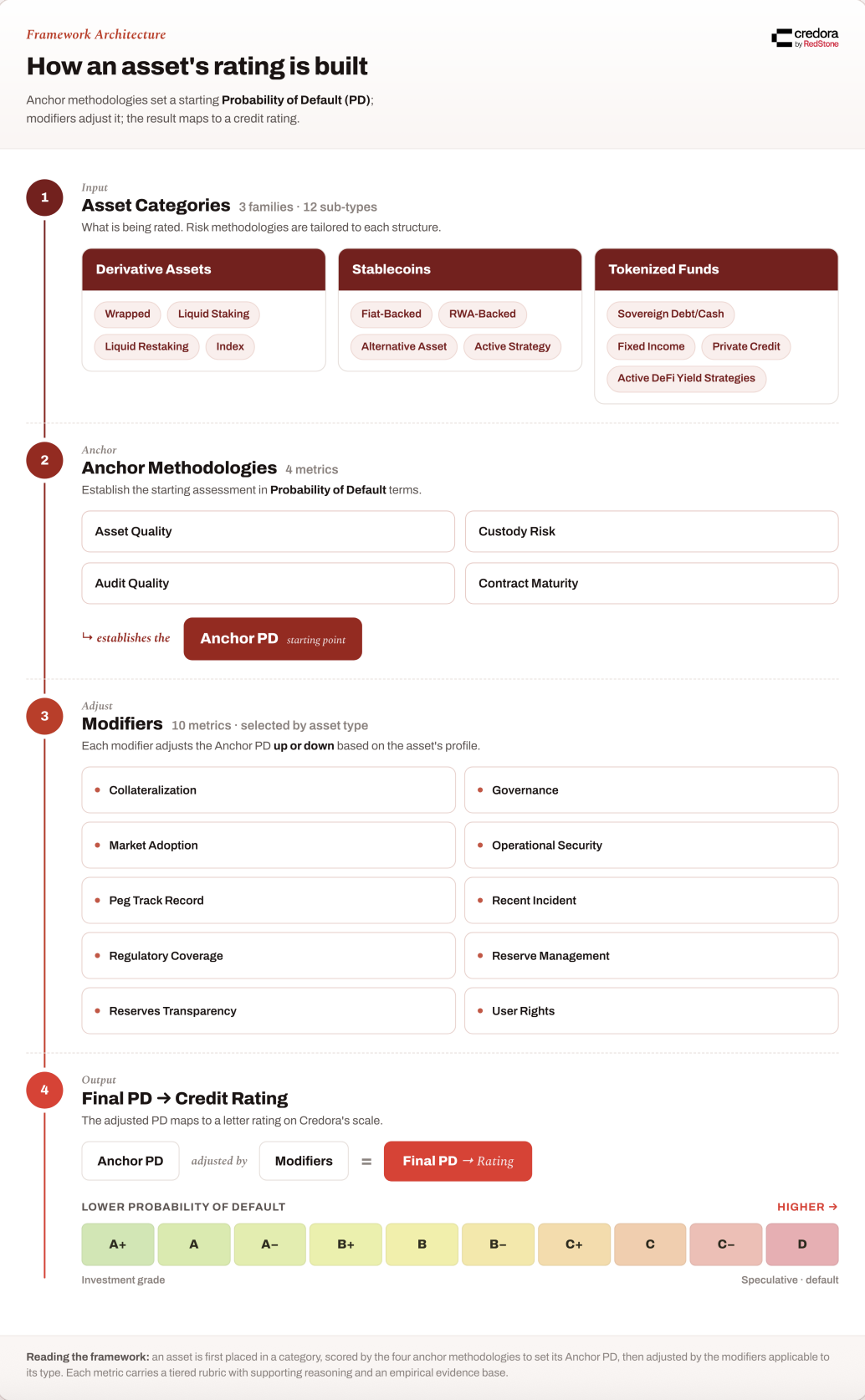
How the rating is structured for tokenized assets specifically. The anchor stays put in Reserve Asset Quality combined with Custody Risk, with the bankruptcy-remoteness credit, gated on what the holder legally owns, as the single largest lever; smart-contract risk sits in the modifier layer rather than the anchor, because fund contracts are typically simple and permissioned. The anchor is then scaled by the Dependency Amplifiers (bridge, oracle, tokenization provider, and DeFi composability/reflexivity amplifiers). Most general modifiers carry over (Regulatory Coverage, User Rights, Operational Security, Concentration, Recent Incident), and a set of tokenized-asset-specific modifiers adapts the rest: AUM on absolute size bands, Fund Management Experience, Fund Transparency, and NAV Track Record (which replaces Peg Track Record for a NAV instrument).